
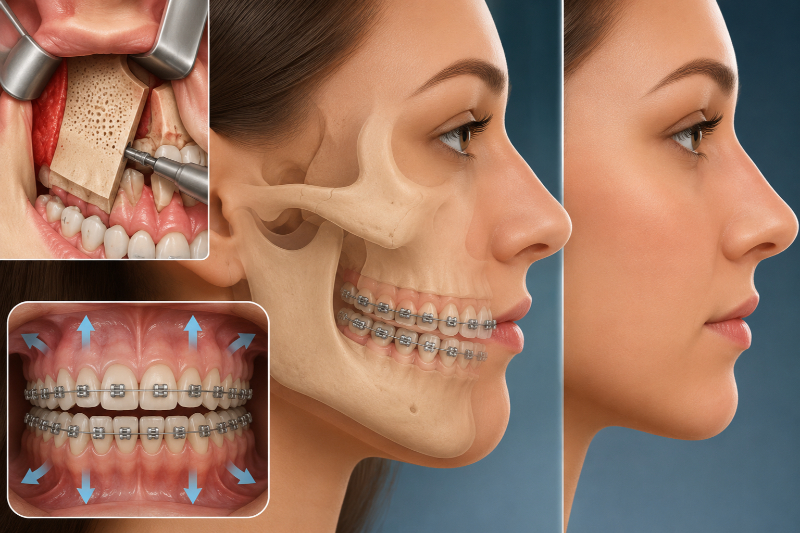
What Is Surgically Facilitated Orthodontic Therapy (SFOT)?
Surgically Facilitated Orthodontic Therapy (SFOT) is an advanced treatment approach that combines orthodontics with a minor surgical procedure to help teeth move more efficiently and safely through the bone.
SFOT is designed to enhance the body’s natural bone remodeling process, allowing orthodontic treatment to progress more effectively in certain patients. This approach is commonly used in adults or patients with limited bone support, significant crowding, or complex orthodontic concerns.
During SFOT treatment, a periodontist or oral surgeon works together with your orthodontist to create a more favorable environment for tooth movement while supporting the health and stability of the gums and bone.
Your orthodontist may recommend Surgically Facilitated Orthodontic Therapy if you have:
- Moderate to severe crowding
- Thin bone or gum tissue around the teeth
- Gum recession concerns
- A narrow dental arch
- The desire to reduce orthodontic treatment time
- Teeth that require significant movement
- Certain bite or jaw discrepancies
- Concerns about long-term periodontal support during treatment
SFOT can help improve the efficiency, stability, and overall health of orthodontic treatment in properly selected patients.
How Does SFOT Work?
Surgically Facilitated Orthodontic Therapy works by stimulating the body’s natural healing response within the bone surrounding the teeth.
The procedure involves a minor surgical treatment performed by a periodontist or oral surgeon. During the procedure:
- Small areas of the bone surrounding the teeth are carefully treated
- Bone grafting material may be added to improve support and thickness
- The body begins an accelerated healing response
- Bone remodeling activity temporarily increases
- Teeth are able to move more efficiently during orthodontic treatment
This temporary increase in bone activity is known as the Regional Acceleratory Phenomenon (RAP). During this period, orthodontic tooth movement can occur more efficiently while supporting healthy bone and gum tissue.
Orthodontic adjustments are carefully coordinated during this healing phase to maximize treatment effectiveness.
What Does SFOT Treatment Look Like?
Initial Consultation
During the consultation, your orthodontist will evaluate the teeth, bite, gums, and supporting bone. Digital scans, photos, X-rays, and sometimes CBCT imaging may be taken to determine if SFOT is appropriate for your treatment goals.
Your orthodontist may also coordinate with a periodontist or oral surgeon to evaluate bone and gum health before treatment begins.
Orthodontic Preparation
In many cases, braces or clear aligners are placed before the SFOT procedure so orthodontic movement can begin shortly after surgery.
Your orthodontic team will create a customized treatment plan designed around your specific needs and timing.
SFOT Procedure
The surgical portion of treatment is typically performed in a periodontal or oral surgery office using local anesthetic, and sometimes sedation for patient comfort.
During the procedure:
- Small areas of the bone are carefully treated around selected teeth
- Bone grafting material may be placed when needed
- The gums are repositioned and allowed to heal
Most patients experience mild to moderate soreness for several days after the procedure.
Active Orthodontic Treatment
Following surgery, orthodontic adjustments are timed carefully to take advantage of the accelerated bone remodeling process.
During this phase:
- Teeth may move more efficiently
- Treatment progress is monitored closely
- Regular orthodontic visits continue
- Bone and gum health are carefully evaluated throughout treatment
Many patients notice improved efficiency and progress during this stage of care.
Why Consider Surgically Facilitated Orthodontic Therapy?
SFOT offers several benefits for patients who require advanced orthodontic care with additional periodontal or bone support.
Benefits of SFOT Treatment
- Helps teeth move more efficiently
- May shorten overall orthodontic treatment time
- Supports healthy bone and gum tissue
- Can improve long-term periodontal stability
- Allows for safer movement of teeth in some patients
- May reduce the need for tooth extractions in certain cases
- Can help expand the dental arches more conservatively
- Supports improved facial and smile aesthetics
- Enhances interdisciplinary treatment between orthodontics and periodontics
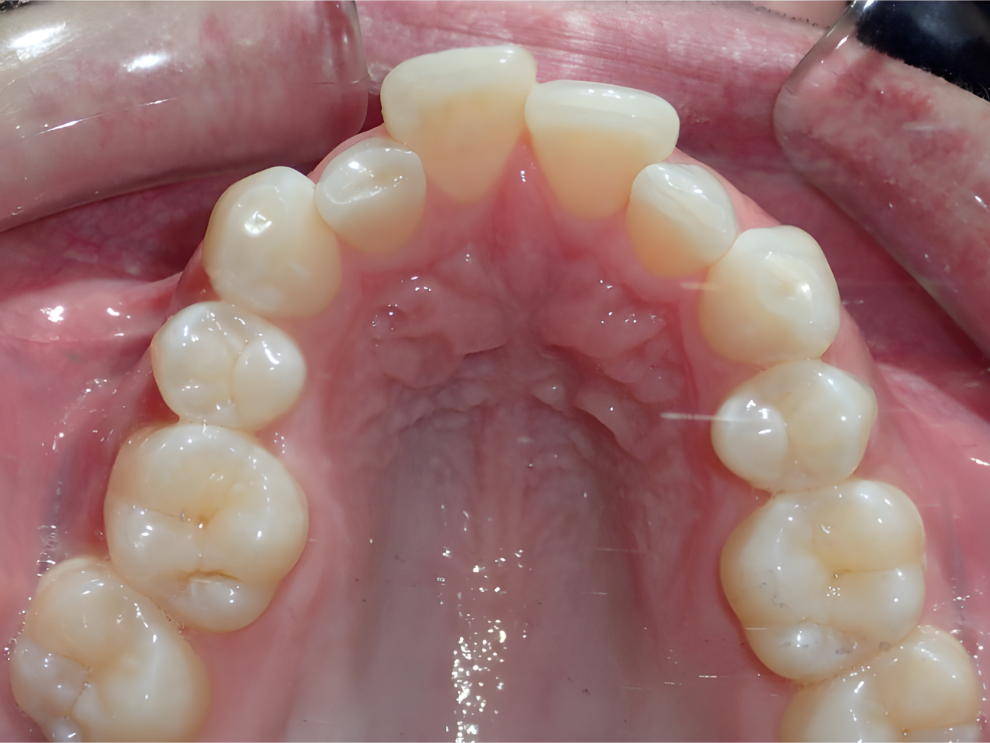
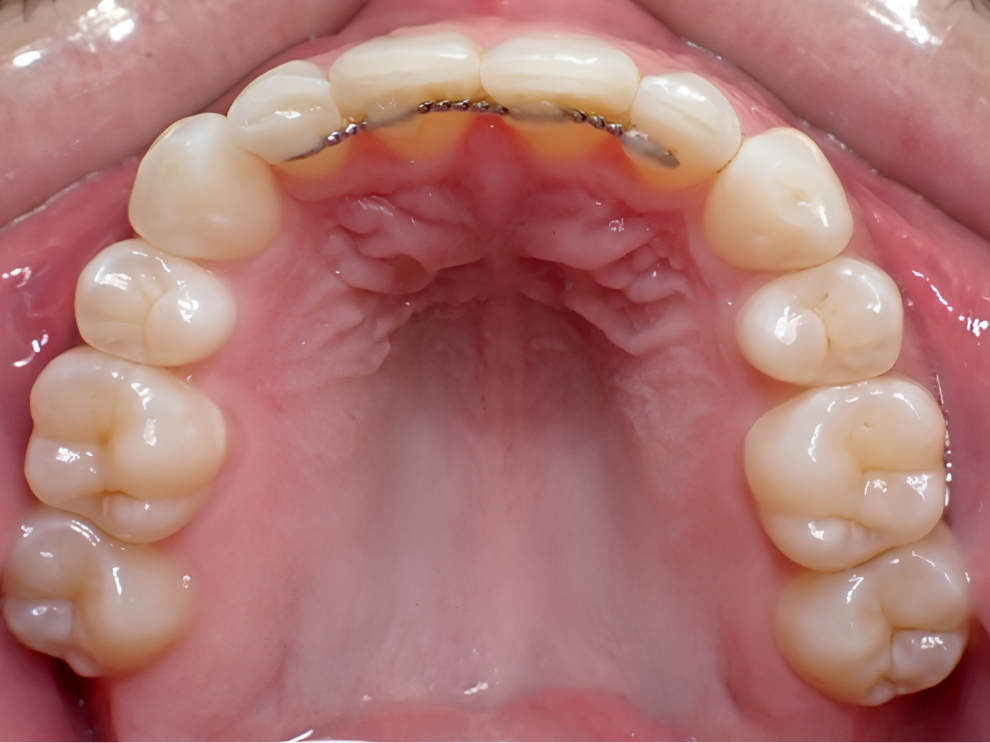
For properly selected patients, SFOT can improve both the efficiency and health of orthodontic treatment outcomes.
BEFORE
AFTER
Surgically Facilitated Orthodontic Therapy (SFOT) Frequently Asked Questions
Does SFOT hurt?
Most patients experience mild to moderate soreness for several days after the procedure. Discomfort is typically manageable with prescribed or over-the-counter medications and improves as healing progresses.
How long does SFOT treatment take?
The surgical healing phase is relatively short, but orthodontic treatment continues throughout the process. Many patients experience more efficient tooth movement during treatment, which may help reduce total treatment time.
Treatment length varies depending on the complexity of the case and individual treatment goals.
Is SFOT safe?
Yes. When performed by experienced specialists and combined with proper orthodontic care, SFOT is considered a safe and effective treatment option for appropriate candidates.
Careful planning and monitoring are essential throughout treatment.
Will I need bone grafting?
In many cases, bone grafting material is placed during the SFOT procedure to improve bone thickness and support around the teeth. Your doctor will determine whether grafting is recommended for your specific needs.
Who performs the surgical procedure?
The surgical portion of SFOT is typically performed by a periodontist or oral surgeon working closely with your orthodontist as part of a coordinated treatment team.
What foods should be avoided after the procedure?
Patients are usually advised to follow a softer diet during the initial healing period and avoid:
- Hard foods
- Crunchy foods
- Sticky foods
- Foods that may irritate the surgical sites
Your surgical team will provide detailed dietary instructions after treatment.
How do we keep everything clean during treatment?
Excellent oral hygiene is extremely important during SFOT treatment.
Patients should:
- Brush carefully around braces or aligners
- Follow all post-surgical cleaning instructions
- Use any prescribed rinses if recommended
- Keep the gums and surgical areas as clean as possible during healing
Your orthodontic and periodontal teams will provide detailed hygiene instructions.
Will I still need braces or aligners?
Yes. SFOT is performed to enhance orthodontic treatment, so braces or clear aligners are still needed to move the teeth into their final positions.
Can adults have SFOT?
Yes. SFOT is commonly performed for adult orthodontic patients, especially when additional bone support or enhanced tooth movement is beneficial.
What happens after SFOT treatment is complete?
After orthodontic treatment is completed, retainers are typically used to maintain the final tooth positions and support long-term stability.
Your orthodontist will provide a customized retention plan based on your treatment needs.
Who is a good candidate for SFOT?
Patients with moderate to severe crowding, thin bone support, gum recession concerns, or complex orthodontic needs may benefit from SFOT.
A comprehensive orthodontic and periodontal evaluation is the best way to determine whether SFOT is an appropriate treatment option for you.